
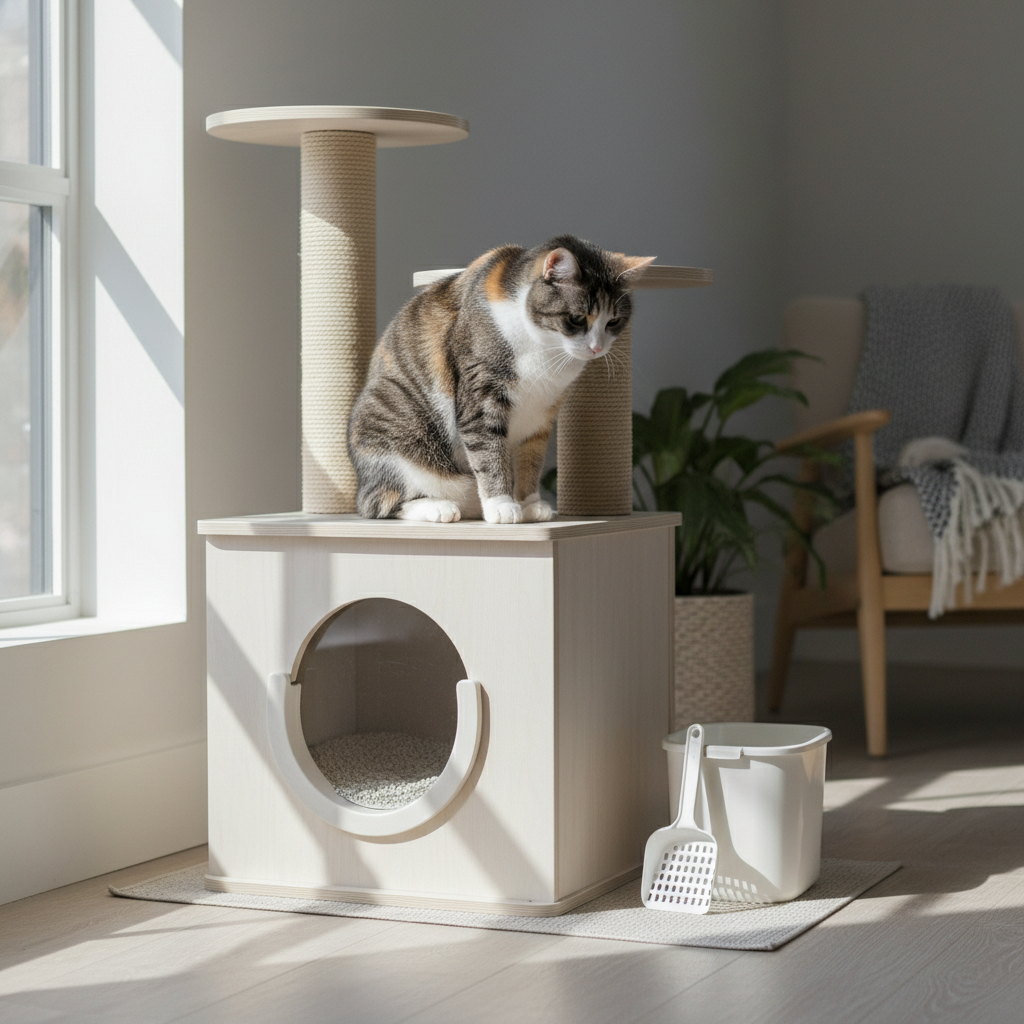
Finding the perfect balance between your cat’s entertainment needs and practical litter box placement can be challenging, especially in smaller homes. A cat tree with litter box offers an innovative solution that combines vertical play space with essential bathroom facilities in one compact piece of furniture. These multi-functional units are becoming increasingly popular among cat owners who want to maximize their living space while keeping their feline friends happy and comfortable.
Space-saving cat furniture has evolved significantly in recent years, and the integration of litter boxes into cat trees represents one of the most practical innovations. These combination units address multiple cat needs simultaneously while helping owners maintain a cleaner, more organized home environment.
What Is a Cat Tree With Litter Box?
A cat tree with litter box is a multi-level piece of cat furniture that incorporates a concealed litter box compartment within the structure of a traditional cat tree. These units typically feature climbing platforms, scratching posts, perches, and hiding spots on the upper levels, while housing the litter box in an enclosed compartment at the base or middle section.
The design philosophy behind these combination units focuses on vertical space utilization and privacy. Cats naturally prefer elevated spaces for observation and rest, while also seeking discrete, enclosed areas for their bathroom needs. By combining these preferences into a single piece of furniture, manufacturers have created an efficient solution for modern cat ownership.
Most models feature removable litter trays for easy cleaning, ventilation systems to control odors, and access doors that can be positioned to suit your room layout. The litter compartment is typically large enough to accommodate standard-sized litter boxes or custom-fitted trays that come with the unit.
Benefits of Cat Trees With Integrated Litter Boxes
Space Efficiency and Room Organization
The primary advantage of a cat tree with litter box is its ability to consolidate multiple cat necessities into a single footprint. Instead of dedicating separate floor space for a litter box and cat tree, these combination units allow you to provide both functions while using minimal room area. This is particularly valuable in apartments, condos, or homes where space is at a premium.
These units help create a designated “cat zone” in your home, keeping all feline-related items organized in one area. This centralized approach can make your living space feel less cluttered while ensuring your cat has easy access to everything they need.
Enhanced Privacy for Cats
Cats value privacy when using their litter box, and the enclosed design of these combination units provides the discretion many cats prefer. The litter compartment is typically well-ventilated but visually separated from the main living area, which can help reduce litter box anxiety in sensitive cats.
The elevated design also means the litter area is naturally separated from high-traffic floor areas, giving cats a sense of security while they attend to their business. This can be especially beneficial for cats who are hesitant to use litter boxes placed in busy or exposed locations.
Odor Control and Containment
Well-designed cat tree litter box combinations incorporate ventilation systems and enclosed compartments that help contain odors more effectively than open litter boxes. Many models feature charcoal filters, ventilation slots, or small fans to maintain air circulation within the litter compartment.
The enclosed design also helps contain litter tracking, as cats must navigate through the compartment entrance rather than stepping directly from an open litter box onto your floors. Some models include entrance mats or textured surfaces to further reduce litter tracking throughout your home.
Types and Styles of Cat Tree Litter Box Combinations
Traditional Tower Designs
Traditional tower-style units feature a vertical structure with the litter box compartment located at the base. These models typically offer multiple levels above the litter area, including perches, scratching posts, and enclosed hideaways. The height advantage provides cats with excellent vantage points while keeping the litter area discrete at floor level.
Tower designs work well in corners or against walls, making them suitable for most room layouts. They typically range from 4 to 7 feet in height and can accommodate multiple cats with various platform levels and activity areas.
Cabinet-Style Units
Cabinet-style cat trees with litter boxes resemble furniture pieces more than traditional pet accessories. These units often feature wood-grain finishes, decorative panels, and designs that complement home decor. The litter compartment is completely enclosed within what appears to be a cabinet or sideboard, with cat tree elements integrated into the top surface.
These models are ideal for owners who prefer pet furniture that blends seamlessly with their interior design. They typically offer more substantial litter compartments and may include storage areas for litter supplies, cleaning materials, or other cat accessories.
Modular and Expandable Systems
Some manufacturers offer modular systems where the litter box component can be combined with various cat tree elements according to your space and preferences. These systems allow you to customize the configuration and potentially expand or reconfigure the setup as your needs change.
Modular systems are particularly useful for multi-cat households or situations where you might want to relocate or modify the setup over time. They typically feature connecting hardware that allows secure attachment between different components.
Key Features to Look for When Shopping
Size and Capacity Considerations
The litter compartment should be large enough to accommodate your preferred litter box size or the included tray system. Standard compartments should measure at least 20 inches by 15 inches to provide adequate space for most cats. Taller cats or larger breeds may require deeper compartments to ensure comfortable access and use.
Consider the overall footprint of the unit in relation to your available space. Measure your intended location carefully, accounting for door swing clearance and access for cleaning. Remember that cats need easy entry and exit access, so avoid placing the unit in cramped corners or areas with limited approach space.
Construction Quality and Stability
A cat tree with litter box must be exceptionally stable since cats will be climbing, jumping, and potentially playing vigorously on the upper levels. Look for units with wide, heavy bases and quality construction materials. Particle board with laminate covering is common and acceptable for lighter use, while solid wood or high-grade engineered wood provides superior durability.
Check weight ratings for individual platforms and the overall unit capacity. Multi-cat households should prioritize units rated for higher weight limits and featuring reinforced platform supports. Wobbling or instability can make cats reluctant to use either the climbing areas or the litter compartment.
Ventilation and Odor Management
Effective ventilation is crucial for maintaining air quality within the litter compartment. Look for units with multiple ventilation points, including rear vents, side airflow channels, or integrated ventilation systems. Some premium models include replaceable charcoal filters or small, quiet ventilation fans.
The compartment interior should feature smooth, non-porous surfaces that resist odor absorption and allow for easy cleaning. Avoid units with unsealed wood or fabric-lined litter areas, as these materials can harbor odors and bacteria over time.
Accessibility and Cleaning Convenience
Daily litter maintenance should be straightforward and convenient. Look for units with wide-opening doors, removable front panels, or top-access designs that provide easy reach to all areas of the litter compartment. Some models feature sliding trays that extend completely outside the unit for thorough cleaning.
Consider the cleaning process for the cat tree elements as well. Removable, washable platform covers and replaceable scratching surfaces will help maintain the unit’s appearance and hygiene over time.
Installation and Setup Guide
Choosing the Right Location
Location selection is critical for both the litter box function and cat tree usage. Choose a spot that provides easy access for your cat while maintaining some privacy from household traffic. Avoid locations near food and water bowls, as cats prefer separation between eating and elimination areas.
Ensure adequate clearance around the unit for cleaning access and cat movement. The location should have reasonable ventilation to support odor control and be convenient for your daily maintenance routine. Consider proximity to electrical outlets if your chosen model includes powered ventilation features.
Assembly Tips and Best Practices
Most cat trees with litter boxes require assembly, and following manufacturer instructions carefully is essential for safety and stability. Start with the base or litter compartment section, ensuring it’s perfectly level before adding upper components. Use all provided hardware and avoid substituting screws or fasteners with different sizes.
Have a helper available for larger units, as some components may be awkward to position and secure single-handedly. Double-check all connections and test stability before allowing cats to use the structure. Some units benefit from wall anchoring for additional security, especially taller models or those intended for multiple large cats.
Initial Introduction to Your Cat
Introduce your cat to the new furniture gradually, allowing them to explore and become comfortable with both the climbing areas and litter compartment. Place familiar bedding or toys on the platforms to encourage investigation and use.
For the litter area, use your cat’s preferred litter type and consider mixing in some used litter from their previous box to provide familiar scents. Keep the previous litter box available initially until you’re confident your cat has fully accepted the new location.
Maintenance and Cleaning Requirements
Daily Maintenance Tasks
Daily maintenance should include scooping the litter box compartment and checking for any tracking or spills around the entrance area. Wipe down the compartment entrance and any visible surfaces with pet-safe cleaning products as needed.
Monitor the upper cat tree areas for excessive hair buildup, particularly on fabric surfaces or in crevices where debris might accumulate. Regular vacuuming or brushing of these areas will help maintain cleanliness and reduce allergen buildup.
Weekly and Monthly Deep Cleaning
Weekly cleaning should include thorough sanitization of the litter compartment, including walls, floor, and ventilation areas. Remove and wash any removable components according to manufacturer instructions. Check and clean ventilation filters if your model includes them.
Monthly maintenance might include more thorough cleaning of the cat tree elements, tightening any loose hardware, and inspecting for wear or damage. Replace scratching surfaces, platform covers, or other consumable components as needed to maintain the unit’s appeal and functionality.
Troubleshooting Common Issues
If cats avoid using the litter compartment, consider litter type, cleanliness, or accessibility issues. Some cats may need time to adjust to the enclosed space or may prefer different entrance configurations. Ensure the compartment doesn’t feel cramped and that ventilation is adequate.
Persistent odors may indicate inadequate ventilation, infrequent cleaning, or absorption into porous materials. Address ventilation issues and consider using enzyme-based cleaners specifically designed for pet odor elimination.
Cost Considerations and Value Assessment
Price Ranges and Budget Planning
Cat trees with litter boxes typically range from $150 for basic models to over $500 for premium units with advanced features. Mid-range options around $250-$350 often provide the best balance of features, quality, and value for most households.
Consider the cost comparison to purchasing separate cat trees and litter box furniture. While combination units may have higher upfront costs than basic alternatives, they often provide better value when considering space savings and functionality consolidation.
Long-term Value and Durability
Evaluate construction quality and warranty coverage when assessing long-term value. Higher-quality units with solid construction and replaceable components often provide better value over time than cheaper alternatives that may need frequent replacement.
Consider ongoing costs such as replacement filters, scratching surface refills, or specialized cleaning products that may be required for specific models. Factor these into your total cost of ownership when comparing options.
Alternatives and Complementary Solutions
DIY Options and Modifications
Handy cat owners might consider modifying existing cat trees to incorporate litter box storage or building custom units tailored to specific space requirements. This approach allows complete customization but requires significant time investment and construction skills.
Simple modifications might include adding litter box enclosures beneath existing cat trees or incorporating litter storage into the base of tower-style units. Ensure any modifications maintain structural integrity and safety standards.
Separate Space-Saving Solutions
If a cat tree with litter box doesn’t suit your specific needs, consider other space-saving approaches such as wall-mounted cat trees combined with corner litter box cabinets, or vertical litter box furniture paired with climbing shelves.
These separate solutions may offer more flexibility in placement and configuration while still achieving space efficiency goals. They also allow independent replacement or upgrading of individual components as needed.
Making the Right Choice for Your Home
Selecting the ideal cat tree with litter box requires careful consideration of your space constraints, cat preferences, and maintenance capabilities. Evaluate your specific needs against the available options, prioritizing features that align with your situation and budget.
Consider your cat’s personality and preferences, as some felines may need time to adjust to combination furniture while others embrace the convenience immediately. The success of these units often depends on proper introduction and consistent maintenance rather than just the initial purchase decision.
A well-chosen cat tree with litter box can significantly improve both your living space organization and your cat’s quality of life. By providing entertainment, exercise, privacy, and essential facilities in one compact unit, these innovative pieces of cat furniture represent an excellent investment for modern pet ownership. Take time to research options thoroughly, read user reviews, and choose a unit that will serve both you and your feline companion well for years to come.