
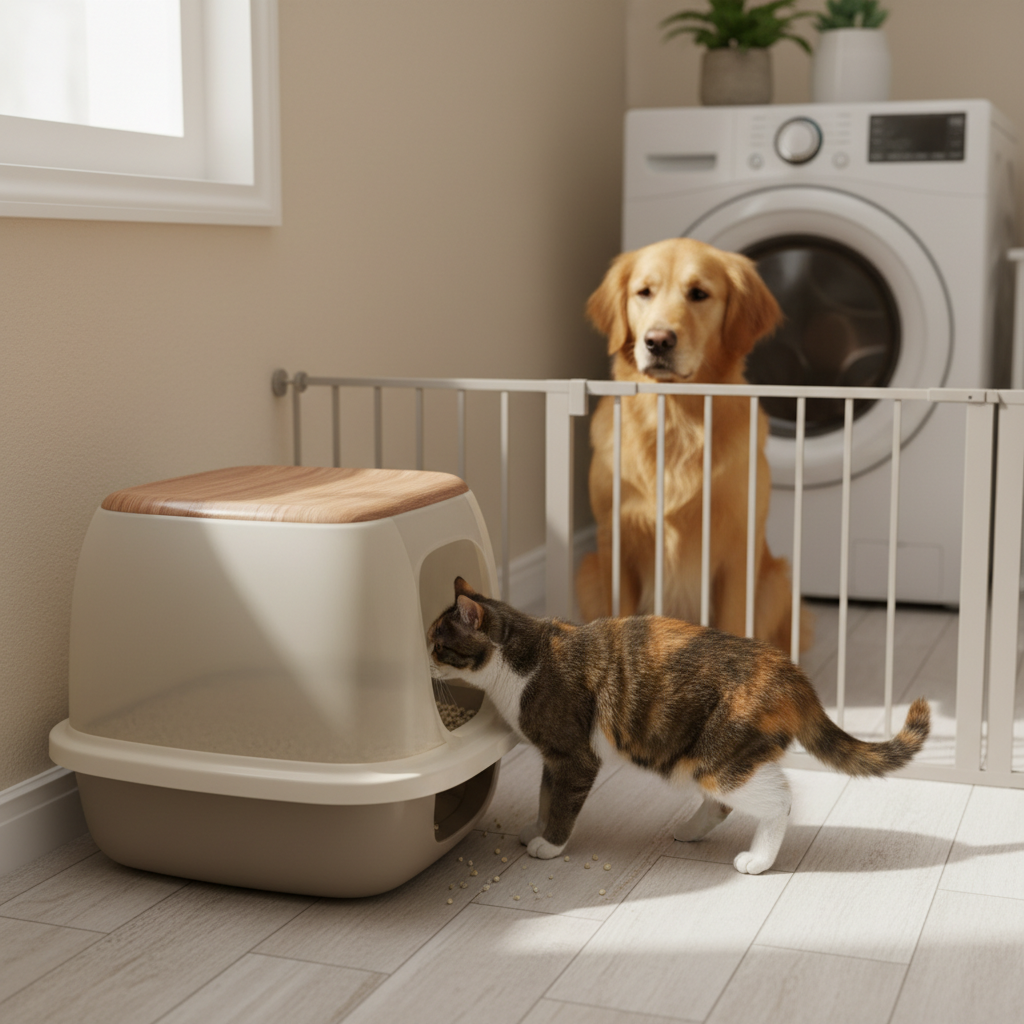
If you’re tired of catching your dog raiding your cat’s litter box for unpleasant “snacks,” you’re not alone. Finding an effective dog proof cat litter box is one of the most common challenges multi-pet households face. Dogs are naturally drawn to cat waste due to its high protein content, but this behavior poses health risks and creates hygiene concerns for pet owners. The good news is that several proven designs and strategies can successfully keep dogs out while maintaining easy access for your feline friends.
This comprehensive guide explores the most effective dog-proof litter box solutions, from specialized enclosures to strategic placement techniques. We’ll cover everything you need to know about selecting, setting up, and maintaining a system that works for both your cats and dogs, ensuring a cleaner, healthier home environment for everyone.
Why Dogs Are Attracted to Cat Litter Boxes
Understanding why dogs target litter boxes helps you choose the most effective prevention strategy. Dogs possess an incredibly sensitive sense of smell that’s 10,000 to 100,000 times stronger than humans. To them, cat waste contains appealing scents and flavors that trigger their natural scavenging instincts.
Cat feces contains partially digested proteins and fats that dogs find irresistible. This behavior, known as coprophagia, is completely normal from a dog’s perspective but understandably disgusting to pet owners. Additionally, many dogs are attracted to the texture and smell of certain cat litters, especially those made from natural materials like clay or corn.
The behavior also stems from evolutionary survival instincts. In the wild, animals consume waste to obtain nutrients they might be lacking in their diet. While domestic dogs receive balanced nutrition, these primitive urges remain strong, particularly in food-motivated breeds.
Health Risks of Dogs Eating Cat Waste
Allowing dogs unrestricted access to litter boxes creates several serious health concerns that extend beyond the obvious hygiene issues. Cat waste can contain harmful parasites, bacteria, and pathogens that pose significant risks to canine health.
Toxoplasma gondii, a parasite commonly found in cat feces, can cause toxoplasmosis in dogs. While many dogs show no symptoms, immunocompromised animals may experience fever, lethargy, and neurological issues. Pregnant dogs face additional risks, as the parasite can affect developing puppies.
Bacterial infections represent another major concern. Cat waste harbors various harmful bacteria including Salmonella and E. coli, which can cause severe gastrointestinal distress in dogs. Symptoms include vomiting, diarrhea, dehydration, and loss of appetite. Some bacterial infections require veterinary treatment with antibiotics.
Ingesting clumping cat litter poses mechanical risks as well. Clay-based litters can expand in the digestive tract, potentially causing intestinal blockages that require emergency surgical intervention. Even non-clumping litters can cause digestive upset and constipation when consumed in large quantities.
Top Dog Proof Cat Litter Box Designs
Covered Litter Box Enclosures
Enclosed litter boxes with secure latching mechanisms offer excellent protection against determined dogs while providing cats with privacy during elimination. These designs typically feature top-entry or front-entry configurations with dog-resistant closures.
Top-entry enclosed boxes work exceptionally well because most dogs cannot navigate the vertical climb required to access the interior. Cats easily jump up and down through the opening, but dogs find this movement pattern challenging and unnatural. Look for models with non-slip surfaces around the entry point to ensure your cat feels secure.
Front-entry enclosures with magnetic or spring-loaded latches provide another effective solution. These designs allow cats to push through lightweight doors while keeping dogs out. The key is selecting doors with appropriate resistance – light enough for cats to open easily but secure enough to deter dogs.
Elevated and Wall-Mounted Solutions
Elevating litter boxes beyond your dog’s reach creates an effective physical barrier while utilizing vertical space efficiently. This approach works particularly well in homes with smaller dogs or cats that are comfortable with heights.
Custom-built elevated platforms allow you to position litter boxes at optimal heights based on your specific pet sizes. Install these platforms in corners or along walls where cats feel secure, ensuring adequate clearance above for comfortable use. Include non-slip surfaces and consider adding small steps or ramps for older cats.
Wall-mounted litter box systems represent the ultimate space-saving solution for small homes. These specialized units attach securely to wall studs and include integrated waste collection systems. While initially more expensive, wall-mounted options completely eliminate floor-level access for dogs.
Baby Gate Barriers
Strategic baby gate placement creates designated cat-only zones without requiring specialized litter box equipment. This cost-effective approach works well when you have adequate space to dedicate an entire room or area to litter box placement.
Install gates with cat-sized openings at the bottom, allowing felines to pass through while blocking dogs. Alternatively, position standard baby gates high enough for cats to slip underneath but too low for dogs to access comfortably. Ensure gate heights accommodate your specific pet sizes.
Pressure-mounted gates work well for temporary solutions, while hardware-mounted options provide maximum security for persistent dogs. Consider gates with easy-open latches for human access during cleaning and maintenance.
DIY Dog Proof Cat Litter Box Solutions
Creating your own dog proof cat litter box system allows for complete customization while often saving money compared to commercial alternatives. These projects range from simple modifications to existing boxes to complete custom enclosures.
Storage Container Conversions
Large plastic storage containers make excellent foundations for custom dog-proof litter boxes. Choose containers with secure, tight-fitting lids and cut appropriately sized entry holes for your cats. This approach provides complete enclosure while maintaining easy access for cleaning.
Cut entry holes approximately 6-7 inches in diameter, positioning them high enough to deter dogs but accessible for cats. Sand all cut edges smooth to prevent injury, and consider adding weatherstripping around the lid perimeter for odor control. Create ventilation holes near the top of the container to maintain air circulation.
For top-entry designs, cut the access hole in the lid and ensure the container walls are low enough for comfortable cat access. Add a small step or platform inside if needed, and include a removable liner for easy cleaning.
Furniture Integration Projects
Integrating litter boxes into existing furniture pieces creates attractive, functional solutions that blend seamlessly with home decor. This approach works particularly well with end tables, cabinets, or custom-built furniture pieces.
Convert unused cabinets by removing shelves and adding ventilation, cat-sized entry holes, and removable floor liners. Install magnetic latches on doors to prevent dog access while allowing easy human entry for maintenance. Ensure adequate interior dimensions for comfortable litter box placement and cat movement.
Purpose-built furniture pieces offer maximum customization options. Design these projects with removable tops or fronts for easy cleaning access, integrated ventilation systems, and multiple entry points if housing multiple litter boxes.
Commercial Dog Proof Litter Box Products
The pet product market offers numerous commercial solutions designed specifically to address the dog-proof litter box challenge. These products range from simple modifications to comprehensive systems.
Automatic and Self-Cleaning Options
Self-cleaning litter boxes often include enclosed designs that naturally deter dogs while providing convenience for pet owners. These systems typically feature covered compartments with restricted access points that cats can navigate but dogs cannot.
Automatic cleaning cycles reduce waste accumulation, making litter boxes less attractive to dogs while maintaining optimal hygiene for cats. Many models include smartphone connectivity, allowing you to monitor usage patterns and receive maintenance alerts.
While more expensive than traditional solutions, automatic systems can provide excellent long-term value through reduced litter consumption and improved household cleanliness. Research reliability ratings and warranty coverage before investing in these advanced systems.
Specialized Enclosure Systems
Commercial litter box enclosures designed specifically for multi-pet households offer proven effectiveness with minimal setup requirements. These products typically include features like secure latching mechanisms, ventilation systems, and easy-clean surfaces.
Look for enclosures with adjustable entry points that accommodate different cat sizes while maintaining dog-proof security. Quality models include removable components for thorough cleaning and replacement parts availability for long-term use.
Consider enclosures with multiple compartments if you have several cats, as this design prevents territorial conflicts while maintaining dog-proof protection throughout the system.
Placement Strategies for Maximum Effectiveness
Even the best dog proof cat litter box design can fail without proper placement strategy. Location selection plays a crucial role in both preventing dog access and encouraging consistent cat usage.
Room Selection Considerations
Choose rooms that offer natural barriers to dog access while remaining convenient for cats. Laundry rooms, bathrooms, and spare bedrooms often provide ideal environments with existing ventilation and easy-clean surfaces.
Avoid high-traffic areas where dogs spend significant time, as this increases the likelihood of persistent attempts to access litter boxes. Similarly, ensure selected locations don’t create stress for cats by placing boxes in quiet, low-disturbance areas.
Consider rooms with existing baby gates or doors that can be modified with cat-sized access points. This approach creates dedicated cat zones without requiring extensive home modifications.
Height and Accessibility Factors
When elevating litter boxes, carefully consider the physical capabilities of all your cats. Senior cats, overweight cats, or those with mobility issues may struggle with high placements that younger, agile cats navigate easily.
Provide multiple access routes for elevated boxes, including steps, ramps, or nearby furniture that cats can use as intermediate platforms. Ensure all access routes include non-slip surfaces for safety and confidence.
Test different heights gradually, starting with modest elevations and increasing based on your cats’ comfort levels and your dogs’ jumping abilities. Document what works best for your specific pet combination.
Training Your Dog to Avoid Litter Boxes
While physical barriers provide immediate solutions, training your dog to avoid litter boxes creates long-term behavioral changes that complement any dog-proof system you implement.
Positive Reinforcement Techniques
Reward-based training focuses on redirecting your dog’s attention away from litter boxes toward appropriate activities and locations. This approach requires consistency and patience but creates lasting behavioral changes.
Establish clear “leave it” commands specifically for litter box areas, rewarding compliance with high-value treats and praise. Practice these commands regularly in various locations throughout your home to reinforce the behavior.
Create positive associations with alternative activities during times when your dog typically seeks out litter boxes. Provide engaging toys, puzzle feeders, or training sessions to redirect their attention constructively.
Deterrent Methods
Safe, humane deterrents can supplement physical barriers and training efforts. Motion-activated devices, scent deterrents, and environmental modifications help reinforce boundaries around litter box areas.
Commercial pet-safe deterrent sprays create unpleasant associations with litter box areas without causing harm. Reapply these products regularly according to manufacturer instructions for maximum effectiveness.
Motion-activated air sprayers or noise makers provide immediate feedback when dogs approach restricted areas. Position these devices to activate before dogs reach litter boxes, creating clear boundary definitions.
Maintenance and Cleaning Tips
Proper maintenance of your dog proof cat litter box system ensures long-term effectiveness while promoting good health for all pets. Regular cleaning schedules and appropriate products keep systems functioning optimally.
Daily Cleaning Routines
Establish consistent daily cleaning routines that address both litter box hygiene and system maintenance. Remove waste promptly to reduce odors that attract dogs, and check all barriers and enclosures for damage or wear.
Inspect latches, hinges, and access points daily to ensure they remain secure and functional. Address any issues immediately to prevent dogs from discovering and exploiting weaknesses in your system.
Monitor your cats’ usage patterns to identify any changes that might indicate system problems or health issues. Sudden changes in elimination habits warrant veterinary consultation.
Deep Cleaning Protocols
Weekly deep cleaning maintains system hygiene and prevents the buildup of odors and bacteria that can attract dogs or discourage cats from using their boxes. Use pet-safe cleaning products that effectively eliminate odors without leaving harmful residues.
Disassemble removable components for thorough cleaning, paying special attention to hinges, latches, and ventilation areas where waste particles and odors can accumulate. Replace worn components promptly to maintain system integrity.
Consider rotating between multiple litter box setups to allow for complete cleaning and drying of individual components without disrupting your cats’ routines.
Common Mistakes to Avoid
Understanding common pitfalls helps you implement more effective dog-proof solutions while avoiding frustrations that lead many pet owners to abandon their efforts prematurely.
Design and Installation Errors
Many pet owners underestimate their dogs’ determination and problem-solving abilities when designing barriers. Ensure your chosen solution accounts for your specific dog’s size, jumping ability, and persistence level.
Avoid creating systems that are difficult for cats to use, as this can lead to elimination problems that create bigger issues than the original dog access problem. Test all systems thoroughly with your cats before considering them permanent solutions.
Don’t overlook the importance of proper ventilation in enclosed systems. Poor air circulation creates unpleasant conditions that discourage cat usage while potentially creating health hazards.
Maintenance Oversights
Failing to maintain dog-proof systems consistently can render even the best designs ineffective over time. Regular inspection and maintenance prevent small problems from becoming major failures.
Don’t ignore signs that your system isn’t working perfectly. Address issues immediately rather than hoping they’ll resolve themselves, as dogs quickly learn to exploit any weaknesses they discover.
Avoid using harsh chemicals or strong-scented cleaning products that might deter cats from using their boxes. Stick to pet-safe, odor-neutralizing products specifically designed for litter box maintenance.
When to Consult a Veterinarian
While most litter box access issues can be resolved through proper barrier implementation and training, certain situations warrant professional veterinary consultation to ensure optimal pet health and behavior.
Consult your veterinarian if your dog shows excessive obsession with cat waste despite multiple intervention attempts. This behavior might indicate nutritional deficiencies or underlying health conditions that require medical attention.
Seek professional guidance if your cat begins eliminating outside the litter box after implementing dog-proof measures. This change could indicate stress, medical issues, or system design problems that need professional assessment.
Contact your veterinarian immediately if either pet shows signs of illness potentially related to litter box issues, including vomiting, diarrhea, lethargy, or changes in appetite or behavior patterns.
Conclusion
Successfully implementing a dog proof cat litter box system requires careful consideration of your specific pets’ needs, behaviors, and physical capabilities. The most effective solutions combine appropriate barrier designs with strategic placement and consistent maintenance routines.
Whether you choose commercial products, DIY solutions, or hybrid approaches, the key to success lies in selecting systems that work for both your cats and your household routines. Remember that what works perfectly for one family might require modifications for another, so be prepared to adjust your approach based on real-world results.
With patience, consistency, and the right combination of strategies, you can create a clean, healthy environment that keeps dogs away from litter boxes while ensuring your cats have comfortable, stress-free access to their elimination areas. The investment in time and resources pays dividends through improved household hygiene, better pet health, and reduced stress for both pets and their human companions.